
Onwards and Upwards
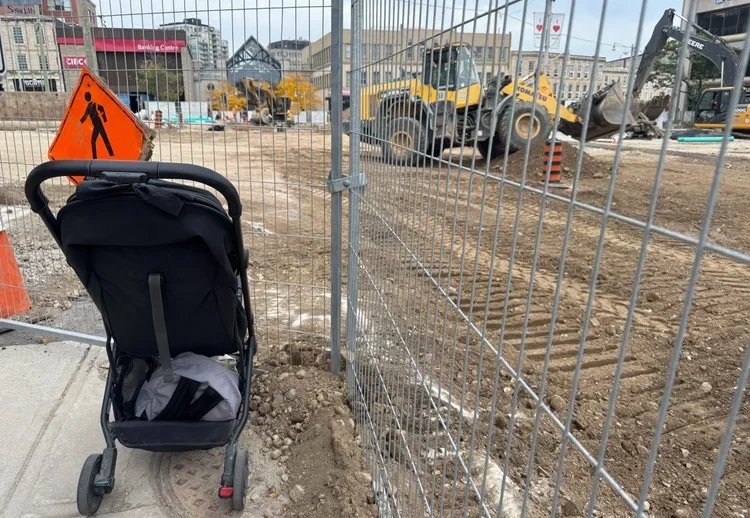
What did the Excavator say to the front end loader? “I dig it.” Once upon a time downtown Guelph, there was an infrastructure renewal site. It was full of ups, downs, highs and lows and opportunities to learn about language, the parallels of movement training and the interests of a growing boy. Now, what do you think Ted says to the construction site?…
On-a. On-a . Uppa. Uppa. Often said in succession, these are two of Ted’s favourite words.
Day to day, there is a lot going on with our 18 month old. Light switches, music, proximity to standing near walls or sitting on benches in the parks. Air conditioners, laundry machines and the lights at train crossings let’s turn those on too.
The meaning of the uppa isn’t always as concise:
Lauryn’s parents are the uppas, because they have an automatic garage door that goes — uppa uppa . Ted will go up into your arms in the morning and then downtown to watch up the arms of the excavators digging downtown in the afternoon.
For every on and up he loves to share with us, we remind Ted that there are also offs and downs. Some phases of the construction project may feel like the pace of your own training sessions. There are times for fast, slow, and don’t forget about rest.
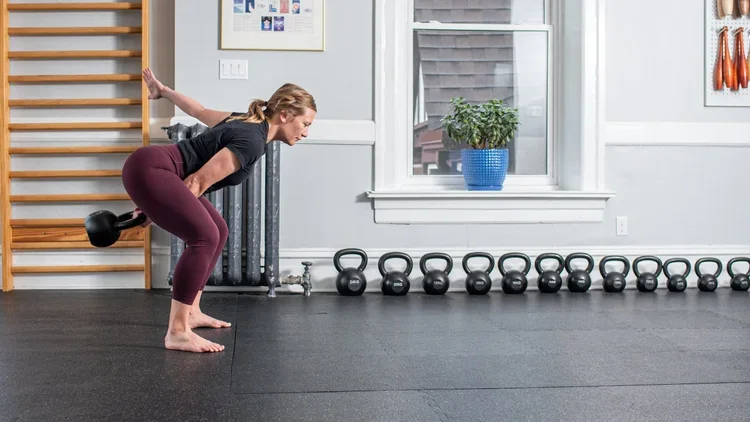
Train for power, and elevate your heart rate with the kettlebell swing. Follow the link to an original Barres and Bells Basic video. Practice with your bodyweight first. Then, maintain your cadence for a safe and strong approach to increasing your cardiovascular capacity.
Fast
Fast training asks the body to produce force, speed or power. It might be a kettlebell swing, a jump, a set of OTM (On the minute) KB cleans. The goal isn't to make everything fast. But, to let the systems of the body practice being explosive.
Try:
10 kettlebell swings
4–8 powerful jumps
A maximum repetition set of an exercise you know well
Then stop before speed turns into slop. Fast is not frantic.
Slow
Slow training is where we spend time paying attention. A slow squat gives you time to feel your feet, knees, hips and utilize that hupp of breath. Train repetitions that allow you to experience space between the top and bottom. A controlled kettlebell deadlift or a bodyweight shadow swing lets you refine the hip-hinge rather than simply getting the weight from the floor to standing.
Slow work can make a familiar movement feel completely different without needing to add more weight. Slow is not easy.
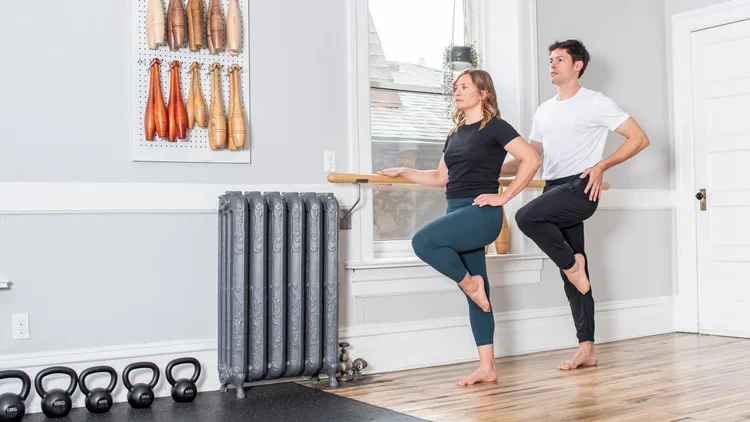
Warming up with slow movements like the Leg Barre as part of the Barres and Bells Basic series build the skills to engage in more advanced movements like squats and sweep throughs as part of the TGU. Connect the mind to the muscles and explore your strengths and enhance your movement deficiencies.
Rest
Some days, rest means a full day away from structured exercise. Other days it might mean walking, stretching, or doing a gentle movement series like a CARs full body check-in, instead of strength or conditioning workout.
Remember the rest within the workout: taking a longer pause between sets, putting the kettlebell down, catching your breath and starting again when you're ready. We don't get stronger simply by asking more from the body. We also need to give it enough space to recuperate and respond.
So this week, notice the rhythm of your own training.
Where could you practise moving fast? Where would slow make you stronger or more aware? And where could you choose rest without feeling like you've missed something? Onwards and upwards, of course. But occasionally: off-wards and downwards too.
Take care,
Ian and Lauryn